- drparikhrushabh@gmail.com
- +91 8779697851, 9619810512
- Mon - Sat: 10:00am to 6:00pm (Sunday Closed)


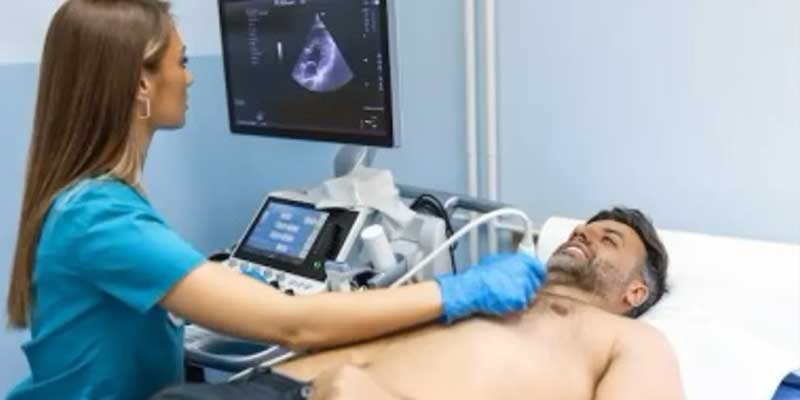
2D Echocardiography (2D Echo)
Meaning:
2D Echocardiography, commonly known as 2D Echo, is a non-invasive ultrasound test that provides real-time images of the heart. It helps evaluate the structure, movement, and function of the heart chambers, valves, and surrounding blood flow.
Causes:
A 2D Echo is recommended when patients experience symptoms such as breathlessness, chest pain, swelling of legs, palpitations, or unexplained fatigue. It is also used to assess known heart conditions, heart murmurs, valve disease, heart failure, congenital heart defects, or after a heart attack.
Treatments / Purpose:
Although 2D Echo is a diagnostic test, its findings guide treatment decisions. It helps determine the need for medications, further cardiac investigations, interventional procedures, or surgical treatment by accurately assessing heart function and valve performance.
Prevention:
Early detection of heart disease through 2D Echo helps prevent progression to serious complications such as heart failure or stroke. Regular cardiac evaluation and timely imaging support long-term heart health and effective disease management.
Frequently Asked Questions
What is a 2D Echo?
A 2D Echo is an ultrasound test that creates detailed images of the heart to evaluate its structure and function.
Why is a 2D Echo performed?
It is performed to diagnose heart conditions, assess valve function, measure heart pumping ability, and detect structural abnormalities.
When is a 2D Echo recommended?
A 2D Echo is recommended when heart-related symptoms are present or to monitor existing heart disease and treatment response.
Is a 2D Echo safe?
Yes, 2D Echocardiography is a completely safe, painless, and radiation-free diagnostic test.
Does a 2D Echo require special preparation?
No special preparation is required, and the test can be performed comfortably in an outpatient setting.