- drparikhrushabh@gmail.com
- +91 8779697851, 9619810512
- Mon - Sat: 10:00am to 6:00pm (Sunday Closed)


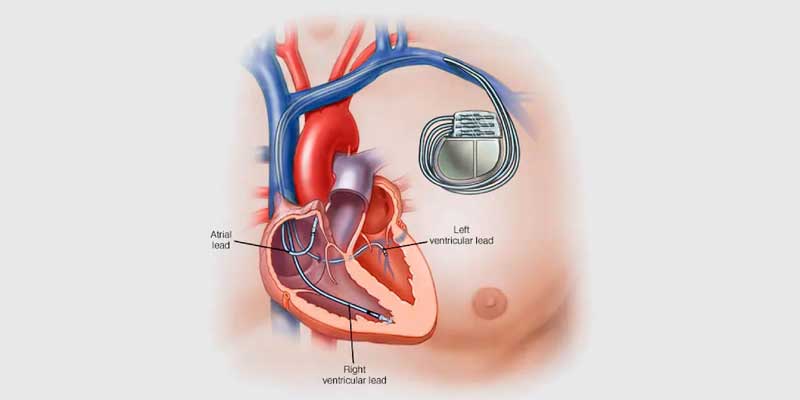
Permanent Pacemaker Implantation
Meaning:
Permanent Pacemaker Implantation is a procedure used to treat slow heart rhythms and electrical conduction disorders. A pacemaker is a small electronic device implanted under the skin that helps regulate the heart’s rhythm by sending electrical impulses to maintain an adequate heart rate.
Causes:
Pacemakers are required in conditions such as complete heart block, sick sinus syndrome, severe bradycardia, and other conduction abnormalities. These conditions may cause symptoms like dizziness, fainting, fatigue, shortness of breath, or reduced exercise tolerance.
Treatments:
The procedure involves placing pacing leads into the heart through a vein and connecting them to a pulse generator implanted beneath the skin. The pacemaker continuously monitors heart rhythm and delivers electrical impulses when needed to maintain a stable heartbeat.
Prevention:
While conduction system disorders cannot always be prevented, early diagnosis and timely intervention help avoid complications such as fainting episodes, heart failure, or sudden cardiac events. Regular follow-up ensures optimal pacemaker function and long-term heart rhythm control.
Frequently Asked Questions
What is a permanent pacemaker?
A permanent pacemaker is a small device implanted under the skin that helps regulate slow or irregular heart rhythms.
Why is a pacemaker needed?
A pacemaker is needed when the heart beats too slowly or irregularly, causing symptoms or posing a risk to overall health.
When is pacemaker implantation recommended?
It is recommended when heart rhythm disorders cause symptoms or when tests show dangerously slow heart rates or conduction blockages.
Is pacemaker implantation a safe procedure?
Yes, pacemaker implantation is a commonly performed and safe procedure when done in experienced centers, with most patients resuming normal activities soon after.