- drparikhrushabh@gmail.com
- +91 8779697851, 9619810512
- Mon - Sat: 10:00am to 6:00pm (Sunday Closed)


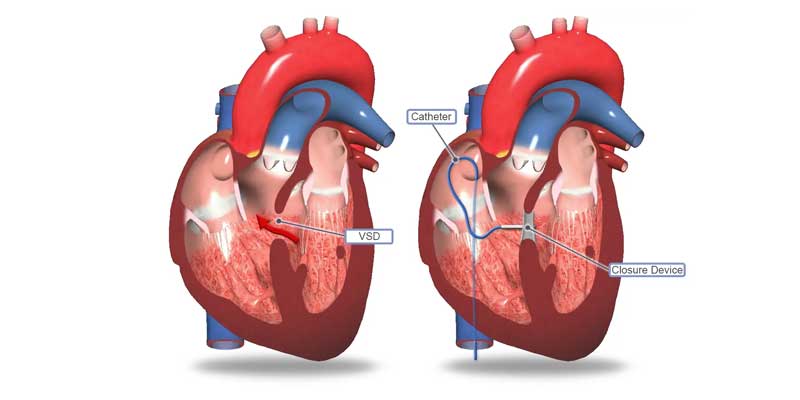
Ventricular Septal Defect (VSD) Device Closure
Meaning:
Ventricular Septal Defect (VSD) Device Closure is a minimally invasive, catheter-based procedure used to close an abnormal opening between the two lower chambers of the heart (ventricles). A specially designed device is placed across the defect to stop abnormal blood flow and restore normal heart circulation without open-heart surgery.
Causes:
VSDs are most commonly congenital, meaning present from birth, but can also develop after a heart attack due to damage to the heart muscle. Depending on the size and location of the defect, VSDs may cause symptoms such as breathlessness, frequent respiratory infections, fatigue, or heart failure.
Treatments:
VSD device closure is performed using imaging guidance to accurately position the closure device. The procedure helps reduce excess blood flow to the lungs, improves heart function, and relieves symptoms. It is an effective alternative to surgery in selected patients with suitable defect anatomy.
Prevention:
Early detection and regular monitoring of congenital heart defects help prevent complications. Timely intervention, appropriate medical management, and long-term follow-up are essential to maintain normal heart function and prevent progression to heart failure.
Frequently Asked Questions
What is a Ventricular Septal Defect?
A Ventricular Septal Defect is an opening in the wall separating the two lower chambers of the heart, allowing abnormal blood flow between them.
Why is VSD device closure performed?
VSD device closure is performed to stop abnormal blood flow, reduce strain on the heart and lungs, and prevent complications such as heart failure or pulmonary hypertension.
When is VSD device closure recommended?
It is recommended when the defect is moderate to large, causes symptoms, or affects heart function, and when the anatomy is suitable for catheter-based treatment.
Is VSD device closure safe?
When performed in experienced centers, VSD device closure is considered a safe and effective minimally invasive procedure with shorter recovery time compared to surgery.