- drparikhrushabh@gmail.com
- +91 8779697851, 9619810512
- Mon - Sat: 10:00am to 6:00pm (Sunday Closed)


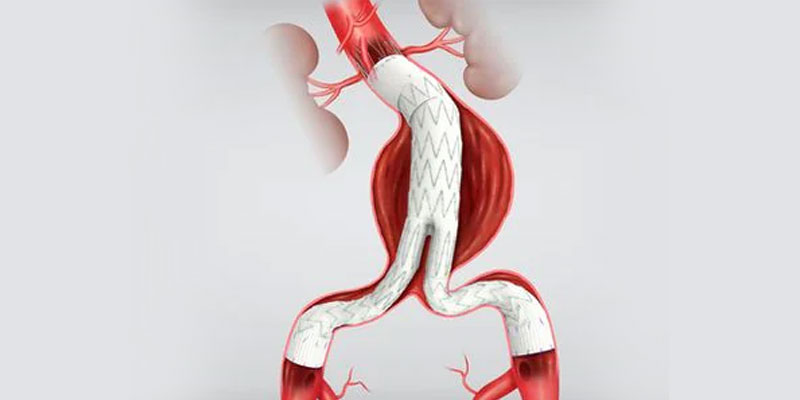
Endovascular Aortic Repair (EVAR)
Meaning:
Endovascular Aortic Repair (EVAR) is a minimally invasive, catheter-based procedure used to treat diseases of the aorta, most commonly abdominal aortic aneurysms. A stent-graft is placed inside the weakened portion of the aorta to reinforce the vessel wall, restore normal blood flow, and reduce the risk of rupture.
Causes:
Aortic aneurysms and related conditions may develop due to long-standing high blood pressure, atherosclerosis, smoking, advancing age, genetic factors, or connective tissue disorders. These conditions often progress silently and can become life-threatening if left untreated.
Treatments:
EVAR involves delivering a stent-graft through a catheter inserted via an artery in the groin. Using advanced imaging guidance, the graft is positioned across the diseased segment of the aorta to seal the aneurysm and restore vessel integrity, offering a safer alternative to open surgical repair in suitable patients.
Prevention:
Regular health check-ups, blood pressure control, smoking cessation, cholesterol management, and early screening for aortic disease in high-risk individuals help prevent progression of aortic conditions. Timely intervention plays a critical role in preventing rupture and complications.
Frequently Asked Questions
What is Endovascular Aortic Repair?
EVAR is a minimally invasive procedure that uses a stent-graft to treat a weakened or enlarged section of the aorta without open surgery.
Why is EVAR performed?
EVAR is performed to prevent rupture of an aortic aneurysm and reduce the risk of serious complications while allowing faster recovery.
When is EVAR recommended?
EVAR is recommended when an aortic aneurysm reaches a size or severity that poses a high risk of rupture and when anatomy is suitable for endovascular repair.
Is EVAR a safe procedure?
When performed in experienced centers, EVAR is considered a safe and effective alternative to open aortic surgery, particularly for high-risk patients.