- drparikhrushabh@gmail.com
- +91 8779697851, 9619810512
- Mon - Sat: 10:00am to 6:00pm (Sunday Closed)


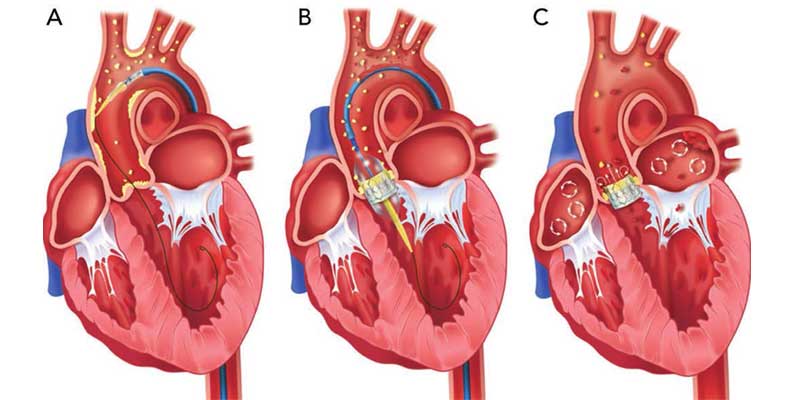
Transcatheter Aortic Valve Implantation / Replacement (TAVI/TAVR)
What is Aortic Stenosis and how common is it ?
Aortic Stenosis (AS) is a common disease present in almost 2-3% of the population above 65 years of age with an increasing prevalence with advancing age. A normal heart pumps about 5.5 liters of blood per minute and the purpose of the heart valves is to ensure that blood flows in only one direction. AS is a heart condition where there is narrowing of the aortic valve due to thickening and calcification, which obstructs blood flow from the heart to the rest of the body. This forces the heart to work harder to pump the blood which eventually leads to heart failure.
What are the symptoms and how do you diagnose AS?
AS typically presents with symptoms similar to any other cardiac illness. The triad of symptoms are:
-
Chest pain
-
Shortness of breath and swelling of feet
-
Dizziness and loss of consciousness
This can be easily diagnosed with a visit to a cardiologist with help of imaging including an ECG , 2D Echocardiogram and a CT scan.
What is TAVI?
In AS, medicines will only make you feel better but not cure the disease. Traditional treatment has involved surgical aortic valve replacement (SAVR), a major procedure requiring open heart surgery. However, not all patients are candidates for this due to high or intermediate risk factors associated with their age or other health conditions. Unlike this, Transcatheter Aortic valve Implantation / Replacement (TAVI/TAVR) is a minimally invasive procedure done through the leg and is designed to replace the diseased valve with a prosthetic valve.
With the availability and the adoption of the Indian manufactured heart valves worldwide, this procedure is relatively less expensive now and gives comparable if not a superior success rate than conventional surgery.
What are the Benefits of TAVI?
-
One of the most significant advantages of TAVI is its suitability even for patients
-
deemed high-risk or inoperable for traditional surgery.
-
Shorter hospital stay of less than 2 days.
-
Less painful than traditional open heart surgery.
-
Reduced risk of complications like infection , bleeding , issues related to general anesthesia.
-
Remarkably improves the overall quality of life in patients.
Frequently Asked Questions
What is Transcatheter Aortic Valve Implantation / Replacement (TAVI/TAVR)?
TAVI/TAVR is a minimally invasive procedure used to replace a diseased aortic valve by placing a new valve through a catheter, without open-heart surgery.
Why is TAVI/TAVR performed?
It is performed to treat severe aortic valve stenosis or dysfunction in patients who are at high or intermediate risk for conventional surgical valve replacement.
When is TAVI/TAVR recommended?
TAVI/TAVR is recommended when aortic valve disease is severe, symptoms such as breathlessness or chest pain are present, and the patient is considered suitable for a transcatheter approach.
How is the TAVI/TAVR procedure done?
The procedure is performed by delivering a replacement valve through a catheter, usually via an artery in the leg, and positioning it within the diseased aortic valve using imaging guidance.
Is TAVI/TAVR a safe procedure?
When performed in experienced centers, TAVI/TAVR is a safe and effective treatment with shorter recovery time and improved quality of life compared to open-heart surgery.