- drparikhrushabh@gmail.com
- +91 8779697851, 9619810512
- Mon - Sat: 10:00am to 6:00pm (Sunday Closed)


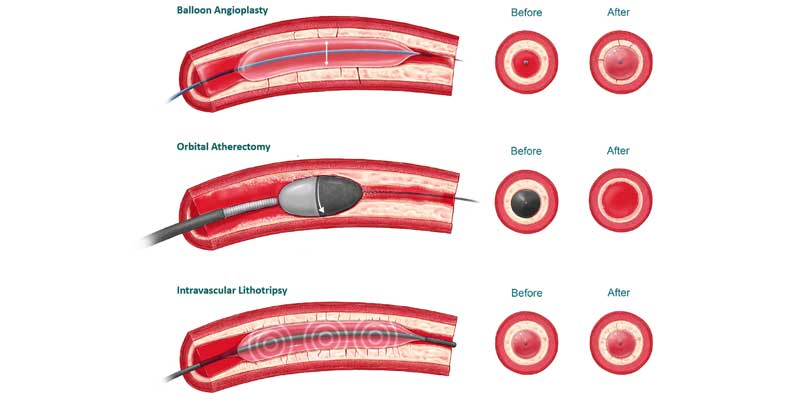
Rotablation / Orbital Atherectomy and Intravascular Lithotripsy (IVL)
Meaning:
Rotablation, Orbital Atherectomy, and Intravascular Lithotripsy (IVL) are advanced plaque-modification techniques used to treat heavily calcified and complex coronary artery blockages. These procedures help prepare hardened arteries by modifying calcium deposits, allowing optimal stent placement and improved blood flow to the heart.
Causes:
Severe coronary artery calcification develops due to long-standing atherosclerosis and is commonly associated with aging, diabetes, chronic kidney disease, high cholesterol, smoking, and uncontrolled high blood pressure. Calcified lesions make standard angioplasty challenging and require specialized treatment techniques.
Treatments:
Treatment involves the use of specialized devices such as rotational or orbital atherectomy systems to gently modify calcified plaque, or IVL technology that uses controlled shockwaves to fracture calcium within the artery wall. These techniques improve vessel compliance and enhance the safety and effectiveness of stent deployment in complex cases.
Prevention:
Preventing severe coronary calcification focuses on early detection and aggressive management of cardiovascular risk factors. This includes maintaining healthy cholesterol levels, controlling diabetes and blood pressure, avoiding tobacco use, adopting a heart-healthy diet, and engaging in regular physical activity.
Frequently Asked Questions
What are Rotablation, Orbital Atherectomy, and IVL?
These are advanced interventional techniques used to treat heavily calcified coronary arteries by modifying calcium deposits before stent placement.
Why are these procedures required?
They are required when arteries are severely calcified and cannot be safely or effectively treated with routine balloon angioplasty alone.
When are these techniques used?
These procedures are used during complex coronary interventions when imaging shows significant calcium that may affect stent expansion or procedural success.
Are these procedures safe?
Yes, when performed by experienced teams, these techniques are safe and effective, significantly improving outcomes in complex coronary artery disease.